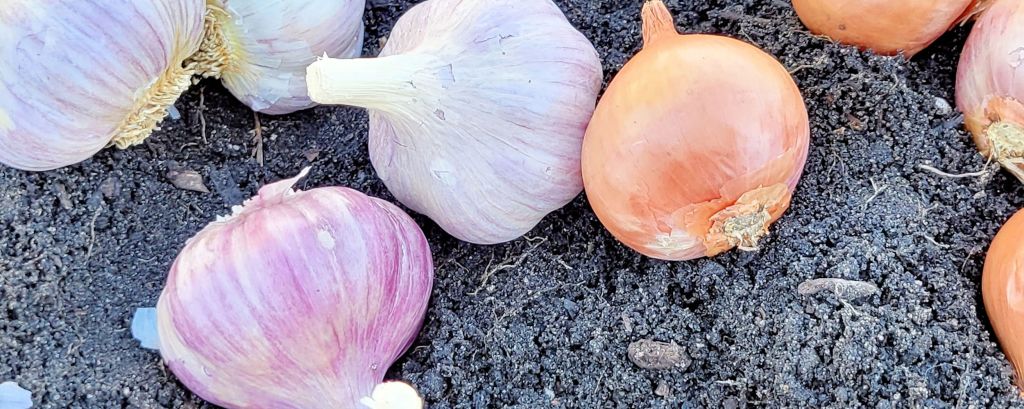
Almost everything we cook in our house starts with garlic. It’s that flavor bomb that I almost double the amount automatically when I try a recipe. It brings a dish together. On its own, its sweet and creamy when roasted with a drizzle of olive oil, a touch of salt and pepper and good enough to just slather on bread.
It’s also a plant that grows itself! I plant it and almost forget it. We prefer to grow Hard-Neck or Stiff-Neck Garlic. We do this so we can have a harvest of garlic scapes in early summer as well.
Garden Prep:
Garlic needs fertile, loose, well-drained soil. The root system doesn’t reach very far or deep so plenty of food and water is a must.
By end of October, I have loosened the soil, removed any weeds that have sprouted and added about 2 inches of composted manure.
Planting:
If you haven’t ordered “seed garlic”, now is the time to do it! Find a variety you like and hold some cloves back after harvest to replant the next season. You want to plant your cloves about a month before the soil freezes. We are in zone 6B, so usually I time it as the last couple weekends in October.
Tip:
Garlic is one plant that will acclimate to your growing conditions over time. Save the biggest and best heads from your harvest and replant those cloves the next fall. They will continuously grow better and bigger.
You want to push the individual cloves blunt end first, into the soil about two inches deep and 6 inches apart. Once all cloves are covered, we add a loose three inch thick layer of straw to prevent soil heaving that would push the cloves out of the soil over winter and its already in place for weed prevention in the spring.
Growing:
Leave your bed undisturbed thru winter. Typically, we already see about three inches of green before activity stops in January. Since we have fed the garden bed with a thick layer of composted manure when planting, we usually skip feeding in spring. We leave the straw on the bed and do not disturb it until harvest. We just pull a few weeds here and there to keep it clean. We usually keep an eye on the sprouts though, to see if we need to help them thru the mulch.
However, you can carefully remove the straw and add a layer of composted manure, then recover with the straw to help prevent weeds and keep the moisture in the soil consistent if you wish.
Harvesting and Storing:
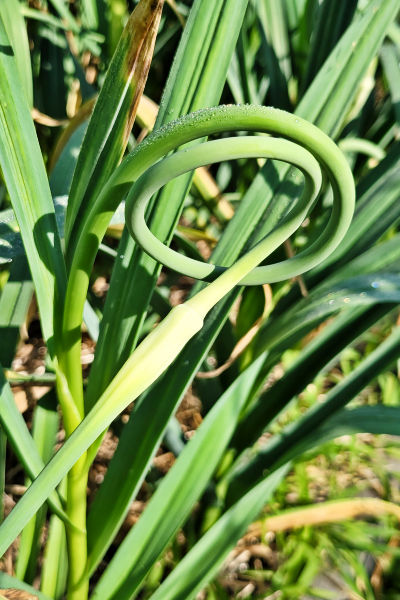
By early summer, you will see a small stem start to emerge from the center of your garlic stalk. This is the scape! The scape will continue to grow until it curls in a spiral and has a bulbous pointed seedpod at the end. Cut the scapes so that the growth energy is then directed back into the plant to grow bigger bulbs.
Tip:
The scape is a delicious harvest. It has a yummy green herbal garlic flavor. You can grill, roast, sauté or pickle them. We love using them in compound butters that we store in the freezer to use in various dishes, for grilling or over the winter months.
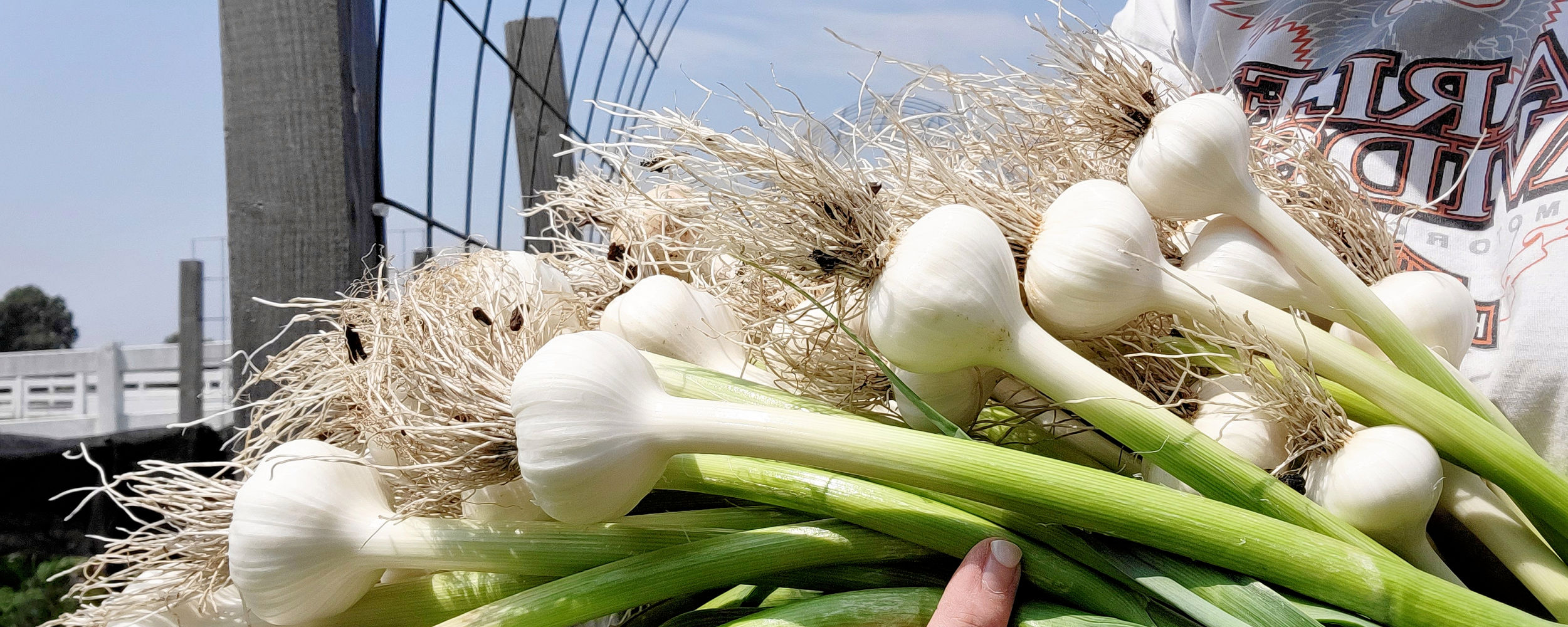
It’s time to harvest garlic when the bottom two to three leaves start to turn yellow. This happens about two weeks after you cut the scapes. You can use a garden fork to loosen the soil or I find that in our raised beds, you can just pull the plants out of the soil.
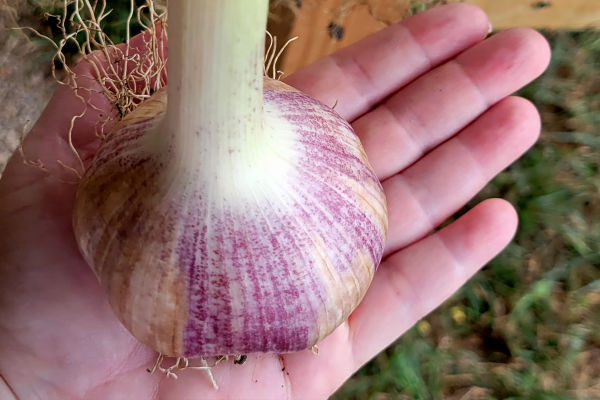
It is time to dry or cure the garlic for storage. We do not like to rinse the dirt off the heads. We like to pull the bottom two leaves down the stalk and off the head to clear the dirt stuck to them. This also has the added bonus to remove a few layers of wrapper so the heads dry faster.
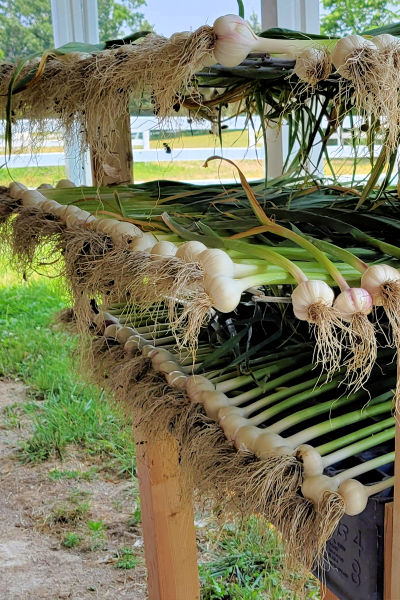
Dry the heads in full sun for two to three weeks until the skins, leave and roots are thoroughly dry. Trim the roots and cut the stems to about an inch long and store in a cool dry place.
Tip:
If you are like us and have multiple things to do in life and realize that Mother Nature may not cooperate for the full two to three weeks, we modify a bit. We set up the garlic on a cobbled together drying rack under the awning of our stable. It may not get the all-out full sun needed but it does get sun and is covered from the weather and we don’t have to run out in the middle of the night to cover our harvest so it doesn’t get rained on. It just takes a bit longer to achieve the level of dryness needed.
 A Cook's Garden - C3Imagines